Showing posts with label United States. Show all posts

Saturday, October 6, 2012

5th Grade Social Studies Unit 2: Discovery and Founding of North America (Colonists)

5th grade Social Studies unit 2 is about the early American colonists and pilgrims. This unit focuses on the journey, hardships, and early society that was developed when founding the initial colonies in America. This unit is listed in my Social Studies 9 Week Plans page, and has its own Unit Page. For convenience purposes, I will post the entire text of that unit here as well:


Unit 2 of 5th grade social studies covers the discovery and founding of America, focusing heavily on the colonists and pilgrims.

For me, time is usually a focus on this unit, because I like to spend more time on the American Revolution, and the 19th and 20th centuries.
With that in mind, I provide three days of instruction on the front end, familiarizing students with the topics and major events of this time period, then I hand over the learning to my students for some project based research.

The project students work on for this unit is a whole class collaboration that is presented in book form and titled "Colonial Life." The project is done in pairs, with each group preparing two pages "textbook style" on their topic.
What I mean by textbook style is a stylized presentation like that of most textbooks, in which the content, photos, illustrations, graphs, etc. all exist in the pages together.

I do not write up any student information handout for this, and they are graded on the simple research rubric that we utilize throughout the year (access the simple research rubric in either .pdf and .doc format).

The topics that students cover in their research include:

  • Colonial Towns: Buildings, layout, variety of towns, defenses.
  • Journey by Sea: How the colonists / pilgrims reached the America's, including challenges, living conditions, etc.
  • The 13 Colonies: A quick research on the original colonies, including founding dates, and a map of the original 13.
  • Crime & Punishment: The crimes that were most common, and their punishments.
  • Native Tribes: A quick research on the native tribes of the area, and their interactions with the colonists.
  • Religion in the Colonies: How religion influenced life and politics in the colonies. Also, what religion meant on a day-by-day basis to the colonists.
  • Colonial Food: How they grew food, and what the typical colonial meal looked like.
  • The Lost Colony of Roanoke: This topic fascinates many students, so I have a group take a look at its history and present some pages on it.
I'm going to present a few links to assist teachers and students alike in research or teaching of the colonial era of American history:
Finally, watch these videos in succession. These are taken from the America: The Story of Us documentary series.


Again, we normally pace this unit fairly quickly. Each group of students is responsible for a two page contribution to our "Colonial Life" book. Finally, if you like how your books turn out, head over to Student Treasures, and order a few free publishing kits. This company will make a free classroom hardbound copy of the book, and your only obligation is to send home a letter to your parents asking them to buy a copy of the classroom book. There are no buying requirements, and the classroom hardbound copy is free regardless of how many parents order. It's a great opportunity that we'll be taking advantage of.

Thursday, October 4, 2012

Famous Individual Project: A Great 5th Grade Research Project With Tons of Activities and Rubrics

Recently, our students in 5th grade completed their first oral project presentation of the year, presenting their individual state posters, the project they did in the 50 states unit,
in front of other students. We asked students to dress for the occasion, and graded them on everything from their posture, the volume of their voice, and the way they dressed. This ended up being a great experience, and we've decided to build on that during the school year.

Next up, we will be doing a Famous Individual project. In this project, students will be completing research on a famous individual of great character. They will be analyzing their individual according to the 7 Habits of Highly Effective People, a program that my school began following this year. Below you will be shown the requirements for this project, including links to all necessary forms. To download everything in one packet, click here:


This project will ask students to:
  • Choose a famous individual, either living or dead, who is not fictional. Once they have chosen their famous individual, they must complete the Justification Page to explain why they believe their individual showed good character and lived a life that benefited others. 
  • Once the students has successfully justified why they have chosen an appropriate person for this project, they will begin research. Students will be taught how to properly cite sources and create a bibliography (this is a big step for 5th graders, but they can do it). First students will learn how to take notes and keep track of sources. I came across a great packet online to help with Note Taking that I will be utilizing. They will use the blank bibliography cards to cite sources, and then will be given the biography outline packet, which will guide their research. Students research papers will be scored based upon the 5th grade research paper rubric.
  • Next, students will be creating a computer based presentation that will supplement the speech they will be giving. We will be doing these presentations in the computer lab with the assistance of our schools computer lab instructor. They will be scored on their computer presentation based on the computer presentation scoring rubric.
  • Finally, in the final step of this project, students will create a short speech to go with their computer presentation, and they will be presenting these projects before other students, parents, and community members. The speeches will focus on the character of their person, their major accomplishments, and how they fit the 7 Habits. The speech will be scored based on the oral presentation scoring rubric
I am very excited to see our students continue to step up. They did a great job on the 50 state projects (as you can see HERE), and I expect great results on this project. 

I have all of these forms available in Microsoft Word format, if you would like any of them, please let me know and I'll get them to you. As always, this is available freely, I believe that teachers should share our resources with one another free of cost if at all possible, and will continue to share everything I make without cost to anyone.

Friday, September 21, 2012

Completed 50 State Project State Strips

My class just finished their state projects, called State Strips. You can find the information on this great research project on two posts I've done, both Teaching the 50 States, and 5th Grade State Research Project: State Strips. You can access the project guidelines for this great research project here (pdf format or docx format). 

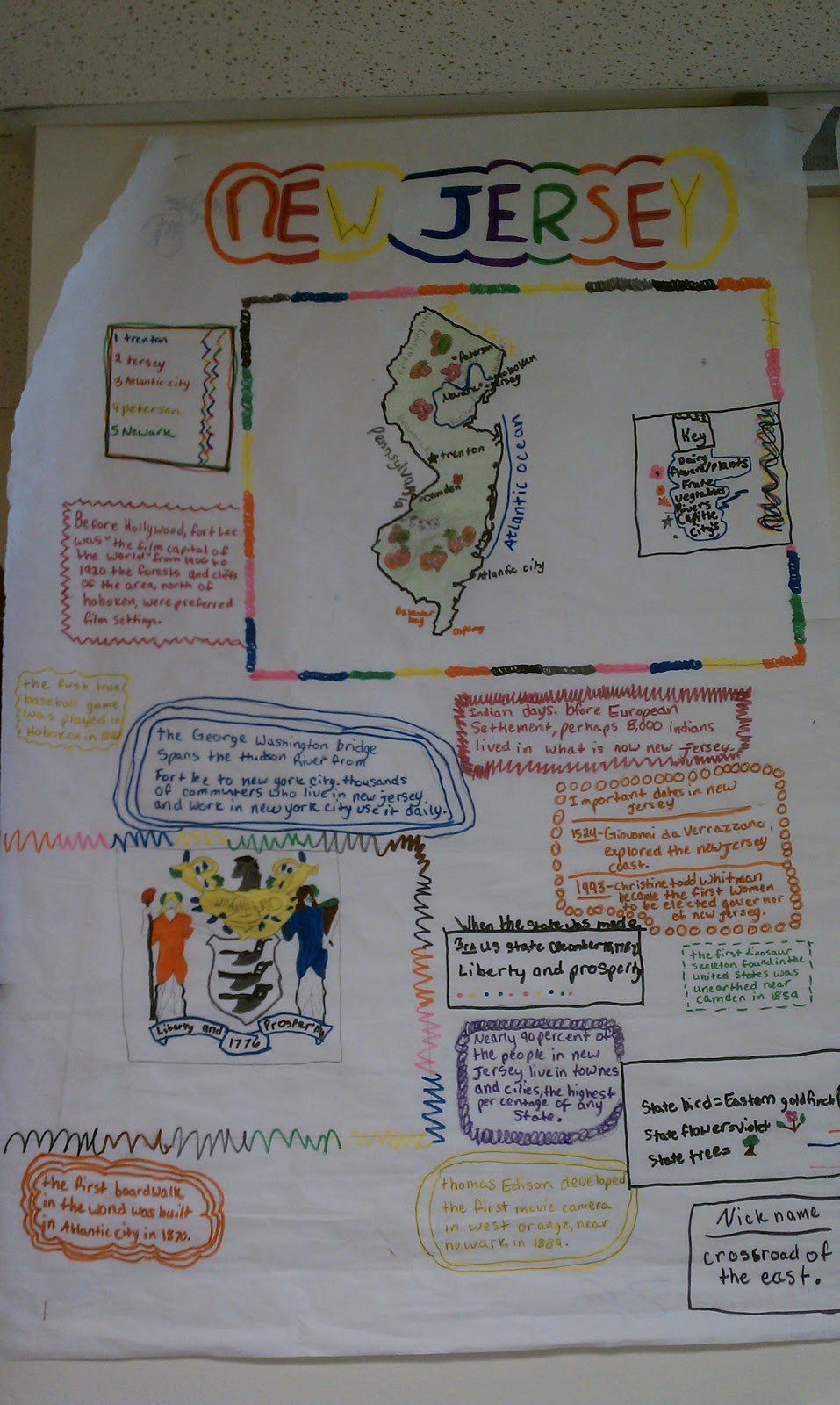
Now that the project is completed, students have also taken the time to present their posters in class. I had students prepare a 1-2 minute long speech in which they taught other students about their state. The exemplary posters were then posted in the hallway. My students love seeing their work in the hallway (and on this blog), so I'm going to show some of the great examples below. Click on any image to see a larger version. 


Monday, September 10, 2012

Update On Social Studies State Strips Project

I recently posted about our current project in social studies (as of September 10th) in a post titled 5th Grade State Research Project: State Strips. Our state strips are off and running. The due date for them in next Wednesday, which means students will have had 10 in class days to finish these projects. We're still fairly early on, but I'm seeing some great progress. Here are some photos of this great project based learning project in action:

Hard at work on Rhode Island. You can see that this student has gotten the title, and is working on facts using one of the classroom atlas books.

This picture shows how we really have to spread out to accommodate for 24 students making posters. We're using every inch of desk and floor space during social studies time, and the kids love it!


Hard at work on Texas. Notice the detail, I'm having students trace their states off of the projector.


More students hard at work with the big map in the background to reinforce the idea of where these states are located.


A great free hand drawing of Colorado's state flag.


A fantastic job so far on the state of Hawaii.


Monday, September 3, 2012

5th Grade State Research Project: State Strips

Like most teachers, I must adapt from year to year to the needs of my students. Although my 9 week plan for the year in Social Studies states that I like to do a unit on United States Geography (states and capitals) after Unit 5, this year I encountered a group of students who don't have a large background in United States geography (I blame high stakes testing, but alas, I must move on). As it's important information, at least on the surface, to learning United States history, I decided to do this unit now, before getting into United States history. This Unit on Geography focuses heavily on naming and identifying the 50 states, and a basic beginners level understanding of World Geography. By clicking on the links above, you can be taken to various resources that can assist you.

This is how it will look in my classroom:

First off, I will print off a large 3 foot by 3 foot wall map of the United States, have student help cut it out, and post it on a bulletin board in the classroom (get this from MegaMaps). As each student finishes their project, they will go and write the name of their state, and color in their state on the map.

Each student will be provided with a 3 foot by 2 foot strip of butcher paper in which to complete their project on (butcher paper is 3 feet wide, so just measure out 2 foot strips and cut).

Following the PROJECT GUIDELINES (pdf format or docx format), students will have exactly one week to complete their project, which is titled "state strips." The example in the guidelines is just something I drew up, and is nothing fancy. I make it a point to not provide them with anything too specific, because I want to see what they're capable of doing.

Friday, July 13, 2012

My 5th Grade Unit on Westward Expansion

In my subject specific static pages within this blog, I have posted resources and plans for teaching a unit on Westward Expansion (the frontier, California Gold Rush, the many trails that brought pioneers out West, etc.).
You can access that unit on my blog, it's titled Unit 5: Westward Expansion. It is my hope that there are links here that are useful to other teachers, most of this stuff is appropriate for grades 2-7 with adaptations. There are many links for kids, and teachers, including lots of print ready pdf documents. Everything is free, so that's always a plus!

I have also taken the exact page and removed all teacher resources from it. When my students begin research in this unit, they will use the page Social Studies Unit 5: Westward Expansion Student Links Only.

Wednesday, July 11, 2012

My 5th Grade Unit on The American Revolution

In my subject pages, I have completed a page with resources for the unit I teach on The American Revolution.
This unit includes information on life under British rule for the colonists, the growing tensions between the colonists and England, the war itself, and some bits on the reconstruction afterwards. The page is titled Social Studies Unit 3: Revolution. There are dozens of links to sites, documents, lessons, and videos.

Tuesday, July 10, 2012

Mission US: An Interactive Game About the American Revolution and Underground Railroad

I am currently going through my subject specific pages, trying to add material for units that will be taught this upcoming year. Tonight I've been thinking about my Social Studies plan for the year, working on my Unit 3 Social Studies page. While planning this out, I found and chose a fantastic website with an interactive game that teaches two lessons, one about the American Revolution, and one about the Underground Railroad. Mission US is free and highly engaging. Here is an excerpt from Mission US about the two missions that are available:
Mission 1: “For Crown or Colony?” puts players in the shoes of Nat Wheeler, a printer’s apprentice in 1770 Boston. They encounter both Patriots and Loyalists, and when rising tensions result in the Boston Massacre, they must choose where their loyalties lie.  
In Mission 2: “Flight to Freedom,” players take on the role of Lucy, a 14-year-old slave in Kentucky.  As they navigate her escape and journey  to Ohio, they discover that life in the “free” North is dangerous and difficult. In 1850, the Fugitive Slave Act brings disaster. Will Lucy ever truly be free?
 I tried out the games, and they are impressive. I will be utilizing this game in my class this year, having students play through both when we are studying each. I think that this interactive experience will deeply engage students in the content, much more than reading about it in the Social Studies book. 


The site even has educator guides available with good classroom ideas, vocabulary, etc. 


You can also view a post made by Richard Byrne on his blog Free Technology for Teachers about Mission US. I didn't find this site there, but in trying to find other resources for the American Revolution, I came across his post and he has good information.

Saturday, June 30, 2012

All About Our City: Las Cruces

With this post, I think I pretty much let the cat out of the bag on the fact that I live in Las Cruces, New Mexico. I've lived here since 2000, and love this great little city in southern New Mexico. So for my students, this means that you'll spend some time during the school year learning about Las Cruces and the Mesilla Valley. We will study Las Cruces and the Mesilla Valley as it is now, and the history of the area.

When studying Las Cruces and the area, you'll need to first focus on some facts. Let's start with demographic information. What I mean by demographic information is data about certain portions of the population. In kid words, I mean that we need to find facts about people living in Las Cruces (like how much money they make on average, or what percentage finished college, etc.). Use the following websites to find some good demographic data about Las Cruces:

Sites with demographic facts about Las Cruces:
Hopefully you notice right from the start that the data you find one each of these sites isn't the same. Why might this be? It's because some of the data is older, and some of it is just estimations while others are based on certain studies. Look for the numbers to be close to know that they're correct.

Next up, let's learn about the history of the Mesilla Valley. Use the following websites to find some good historical facts about the area:

Sites with historical information about Las Cruces and the Mesilla Valley:
Finally, we're going to use this information to create a profile of the area. I made a video about eight years ago that showed historical photos of the area alongside newer photos of the area. Using the Rio Grande Historical Collections, we are going to find photos that we can match to their current locations. I will make a trip to take photos of what these areas look like now, and we will make an updated version of this video, which I will then post to this blog (how fun!). 

Using your information, as well as some photos from the collections linked to above, you have a few options:

1. Head over to Prezi, and create a 15+ slide presentation about the area. 
2. Create a 15+ slide Animoto about the area.
3. Print the information, and make a poster board with at least 10 facts and 5 photos.
4. Write an 8+ paragraph research paper synthesizing your findings. 

Finally, we are going to create a large reproduction of a map of Las Cruces and Mesilla, and place some major landmarks on it. These landmarks include: our school, city hall, NMSU, the district, magistrate, and county court houses, Mesilla Plaza (and in Mesilla Plaza, La Posta, Fountain Theater, abnd San Albino Basilica), downtown, five restaurants, five favorite places of entertainment, and ten major roads).

We are going to use Google Maps, and will project this map of Las Cruces on the board for everyone to see. 

Monday, June 25, 2012

Westward Expansion of the United States Tech Tools

Every year, we do a unit on the Westward Expansion of the United States in the mid 1800s. There are two technology based activities that go with this unit that are always rated the highest by students. I also have a group/individual activity that student must complete as part of this unit. You can access that as a pdf document HERE. These two activities are playing Oregon Trail (yes, the original version) and watching The Donner Party documentary made by PBS awhile back. I have attached links to both here:

To play Oregon Trail online, follow the link, and make sure you've loaded up disc one on the site. It's an exact emulation of the original version that was played on Apple IIe computers way back in the 80s.
Play Oregon Trail 

Next up is The Donner Party documentary, an American Experience documentary from PBS, which you can access HERE or by playing the clip below.

 
Watch The Donner Party on PBS. See more from American Experience.


Monday, June 18, 2012

Presenting 9/11 to 5th Graders

I believe that by 5th grade, students are old enough to understand the gravity of the events of September 11, 2001, and discuss it with all of the emotion and historical significance intact. However, with that being said, we're still talking about young children, and with that in mind, I've developed some activities (with a heavy emphasis on borrowing ideas from other great teachers out there) that go well with teaching about 9/11.

I normally teach United States history chronologically, but I do teach about 9/11/01 on the anniversary or near it if it falls on a weekend. I invite parents to join us for a discussion and remembrance time, and this is how the afternoon goes:

I start with a video that gives a run down of the events of that morning, and play it in its entirety. I usually mix this up quite a bit, and there are hundreds of these videos out there, so I've just chosen the clip that I showed this past year:


After the video, I like to open it up to parents to share their stories of where they were that day. It's interesting to note that with this upcoming group of 5th graders, it will be the last group of students I teach that will themselves have been alive (most of them) on 9/11/01. This is a good chance for parents to connect the events to us here, and usually their stories are pretty routine, including where they were when they heard, what they did for the rest of the day (watched TV), etc. 

This past year, ESPN Outside the Lines showed a small 13 minute piece titled The Man in the Red Bandanna, the story of Welles Crowther, a heroic man who died in the World Trade Center collapse. This story gives a human face to this tragedy. When you tell kids that 2,996 people died that day, they have a difficult time imagining it and the emotions that are tied to that. But this fantastic documentary has been extremely well received. I even had a student opt to do their social studies Individual in American History research project on Welles Crowther.


Once students have watched the video, I invite them to take a copy of a blank bandana, color it red, and write a one paragraph statement about what it means to be a hero. The bandana I use (a large 3 megabyte JPEG file) can be accessed HERE

I end with two tribute videos, to further attach the emotion of that day to our discussion. It's not my goal to evoke tears from my students, but it is a common reaction. I might actually play the tributes before the Welles Crowther video this year. This first one is one of the most emotionally moving things I've ever seen, and will definitely evoke a strong response.


This second video is one I show every year and kids remember and enjoy. 


My goal is to give them a reason to care, and to attach meaning to this singular event that has had a huge impact on the world ever since, the most important day in American history over the past 30+ years, and definitely the defining moment of this century.

Student questions that follow can be quite deep, and some are just curious. I get a lot of questions about people jumping out of the buildings, about the terrorists, and about if it will happen again. This is why it's great to have parents in the room while the discussion takes place. I've done this talk each year for the past 7 years, and have always had a great response from both students and parents. It's a goal of mine for children to understand and remember 9/11, and I look forward to doing it again this year. 

If you're a teacher, and you work with students who are old enough to comprehend and discuss the events, I hope you too will teach your students, and take the time to sit and talk with them, and possibly their parents. 


Sunday, June 17, 2012

Teaching the 50 States

It's shocking how little kids these days know about geography. From hearing a 5th grader say that China is a state, to having another student believe that New Mexico and Mexico are the same thing, it's enough to make you want to do something about it. Well, even though it's a stretch to fit state standards (or common core, depending on where you are), it needs to be taught. I've found a few resources to teach the 50 states that don't seriously impede on class time, and are engaging for students.

Right from the start of the school year, I play this little video each and every day before students head out the door to lunch (or recess, whatever suits your fancy).


The video is set to the lyrics, but if you'd like to have a copy to give to your students, go ahead and download the document HERE.


This song does a great job of teaching students the names of the 50 states, but it doesn't teach them shapes unless you actually show them the video each time (I just download the music to an mp3 file and play it that way), locations, or capitals. There are simple and effective ways to match states with their shapes, including these great Flash Cards (the site is already set up for printing).

If you have time, you might want to assign a research project to your students. I have done this both as a research paper and a poster. I prefer doing a poster, where each student gets a 2' x 2' cut of colored butcher paper (I'm assuming that most schools have rolls upon rolls of colored butcher paper), and must research something similar to the following information:


— State motto 
— State flower
— State tree
— Date of Statehood
— Nickname
— State flag
— State bird
— current events
— current events
— Drawing of the state
— Drawing of the state within the United States


If your students have atlas' with information about each state, or a set of encyclopedias, then these are great resources to use. If you don't, consider Enchanted Learning, they have great information on each state. 


Finally, your students are ready to challenge themselves with an activity that I'd be willing to bet a number of teachers and a majority of American adults couldn't do. Blindly placing each state on the map of the United States. The game is called Place the States, and is provided by Sheppard Software.