Showing posts with label project based learning. Show all posts

Wednesday, May 1, 2013

It's Your Zoo: Critical Thinking Exercise

One of my colleagues has been holding onto a resource for years called "It's My Zoo." This activity, from Teacher Created Resources, is a great time killer / critical thinking activity that students enjoy doing. The activity asks students to design the layout of a zoo following certain pre-set rules. The students can do these zoos either on a sheet of butcher paper, or in 3D using boxes, scraps, etc. I am sorry to say that I neglected to photograph my students finished zoos, but they did come out great and I was excited with the work they produced.

To sum all this up, I decided that the document we've been copying from was getting pretty rough. It was a copy of a copy of a copy or something like that, and was showing its age. So I updated it.

You can download this activity here:

IT'S YOUR ZOO (pdf)

The activity comes with an instruction sheet, a teacher scoring rubric, and animals cards. Enjoy!

Wednesday, April 24, 2013

5th Grade Science Fair Projects

Now that we're approaching the end of the school year, it's time to get the 5th graders working on their science fair projects.

I think it's a great end of year project to do, because it gives students a chance to show off the knowledge and skills they've acquired during the school year. We will be presenting these projects to families and community members in about 3 weeks time.


I look forward to showing off some of the exemplary (and even not so exemplary) projects here on the blog, but for now, I'm going to list some resources for anyone out there who is thinking about doing science fair projects. So here you go:

HERE ARE THE TWO MAIN RESOURCES I AM UTILIZING:
  • Elementary Science Fair Planning Guide: I consider this to be the best resource I came across online. In fact, the document I created for my 5th grade is based on pages from this pdf document.
  • My Science Fair Document: I made some changes to the document listed above, and added my own things to it. This is what we're using for our science fair.

Saturday, December 22, 2012

Our Finished Social Studies Fair Projects

Last month I posted about a project based learning research project that we do called the Social Studies Fair. Obviously this isn't a unique idea, as there are national social studies fair societies, and teachers all over the world have been doing these in different forms for many years.

In any case, I've spent a few years refining the requirements for the fair that we put on at my school, and you can access all of the documents and requirements by clicking the link that begins this post.

This post showcases some of the projects that were presented. I wanted to do something a little different and share some of the photos from our fair in an Animoto video (to learn more about Animoto, click HERE). It was a great social studies fair, the kids were proud to share their work, and I was genuinely impressed with the overall quality of the work presented.


Saturday, December 1, 2012

Teaching Your Students Blooms Taxonomy: A Gateway to Projects Based Math

This past weekend, I attended a workshop run by a married couple that I consider great mentors of mine, they constantly challenge my thinking and inspire me to take my class to the next level.

To make a long story short, I've been racking my brain thinking about how to create effective project based learning opportunities in mathematics that wouldn't just throw students out there, but would give them the tools they need to succeed. I had thought and experimented with various ideas, and was met with failure each time (of course, as a teacher trying new things, failure is ok, but you just have to keep going). I was beginning to feel like I'd hit a brick wall, and then I got the inspiration I needed. It comes in two words, BLOOMS TAXONOMY.

No, the inspiration wasn't for me to go home and brush up on the levels... I mean domains, so I can better reflect on my instruction, the inspiration was to teach my students Blooms, and how to move through the levels... I mean domains, on their own, and create their own learning. I can take absolutely no credit for this, but am pretty excited about it.

I'm obviously at the beginning stages here, but the first step is, of course, to teach my students the levels... er, domains (sorry, I always forget to use the new terminology, it won't happen again). If you're old school (older than 25... years old, not years of experience) then you probably still remember the Blooms domains as knowledge, comprehension, application, analysis, synthesis, and evaluation at the top. BUT, there's a new list, and I like it much better. The terminology is much more kid friendly, and... well I'll just show you:

There it is, the new domains up next to the old domains.
What I like is that I always thought creating should be at the top, because when students are able to create something new and original (in their own mind) from the knowledge you have given them, or the knowledge they have obtained on their own, that's about as good as it gets in this world. 

So, I'm at step one, sharing this with my students, and having them practice creating their own work climbing up what we'll call the Blooms Ladder. If you'd like to join me on my journey, download and give one of the following documents to your students. These are kid friendly definitions of the Blooms domains, both in .doc format. I have both:

OLD BLOOMS KID FRIENDLY DEFINITIONS

NEW BLOOMS KID FRIENDLY DEFINITIONS


Tuesday, November 13, 2012

5th Grade Social Studies Fair Projects: A Great Presentation Based Project

Next up in a growing line of project based research and presentations that are based around social studies will be the schools 5th grade Social Studies Fair. I've been doing the social studies fair for my entire career, and this is the first year that my colleagues in 5th grade will be joining me for this great project.

We've already done two presentation based projects this year, the 50 States Presentation, and the just finished Famous Individual Presentation. Both projects involve a ton of research and synthesis, and the major burden of work and learning on these projects falls on the shoulders of the students. These are great because while I consider them "social studies," they involve reading and writing, and are multi-disciplinary to the point that I had students working on them at all different times during the school day.

I am again going to ask students to cite sources and complete a bibliography in the APA format. I had a few parents who looked at me like I was crazy when I told them that their children would be completing APA reference pages, but they have done them, and done them correctly, so we're moving forward. I have already posted some great Research Project Resources that can get any teacher started with having students research appropriately and go the extra mile in documenting their research in any area.

This project mimics the presentations that students all over the world do for Science Fairs. Students will be purchasing a science tri-fold board, and either working alone or with a partner to complete their project board.

This project was left pretty open ended. First, I explained the emphasis of this project, either history, culture, invention, geography, or ideas. Students were not allowed to do a state, the cultures we have already studied, or any famous individual that was researched for the last project. Topics range from the history and evolution of computers to research about Pearl Harbor. I make it a point to push students in the direction of topics that aren't too broad, but not too obscure, they need to be able to find sources out there.

When the day comes for the presentations, students will be setting up, again in Science Fair format. We'll set up all the poster boards, and will invite guest to join us. Other classes from the school, parents, the community, and dignitaries will be invited to view their great work. Each student or pair of students will create some note cards to guide them in the presentations they will be making numerous times on the day of the Social Studies Fair.

I have included photos of two poster boards done last year. I will post some of the ones that will be done this year (we just began work today), they should be a little more in depth than what I had my students do in previous years.


Finally (and what 99% of you are here for), I have the documents for download:

SOCIAL STUDIES FAIR PROJECT (pdf): This document is what we're using. If you like what you see, I recommend downloading all of these documents in the zip file below so that you can modify it in any way you see fit.

SOCIAL STUDIES FAIR PROJECT ZIP FILE (this file contains all the pages of the above pdf in .doc format.

Please check back around the second week of December when I will post some of the students finished work and pictures from the social studies fair.


Friday, September 28, 2012

The Giver End of Book Collaborative Class Projects

The Giver, by Lois Lowry, is a book I have posted about before, in a book review I did in 2008, and just a few months ago on the pages of this blog, in a post shrewdly titled The Giver, by Lois Lowry: Some Great Ideas for Teachers

As of today, September 28th, my class is nearly done with the book. In fact, we will finish the story in just a few more days. When that time comes, I plan on having my class complete a series of projects. The big push in my school district right now is collaborative learning / cooperative learning (something I've always used consistently in my classroom). It is harder to find opportunities for collaboration in reading class, especially as it relates to literature, but I've come up with a little something that is appropriate for the 5th grade classroom, and I call it simply the end of book collaboration projects.

In this, there are five projects that students can participate in. There is a mega triorama display, a collection of art work based on the story, a classroom imagining of the book of rules, advertisements to visit the community we know as "sameness," and the opportunity to re-imagine the ending, or expand upon the ending of the book. 

These projects give students the opportunity to work in their strengths, be it art, writing, or simply thinking creatively. The pdf document that I have created for this project includes a self-check for students to use, and a scoring rubric.

One word of caution here, if your students haven't finished the book, do not show them this document, it includes spoilers that would ruin the ending. This also holds true for you, the teacher. If you're reading this book for the first time, stay away from the document until you're done, I'd hate to ruin the ending for anyone. 

OK, so now for what you came for. To download this document in pdf format, simply click HERE

Friday, September 21, 2012

Completed 50 State Project State Strips

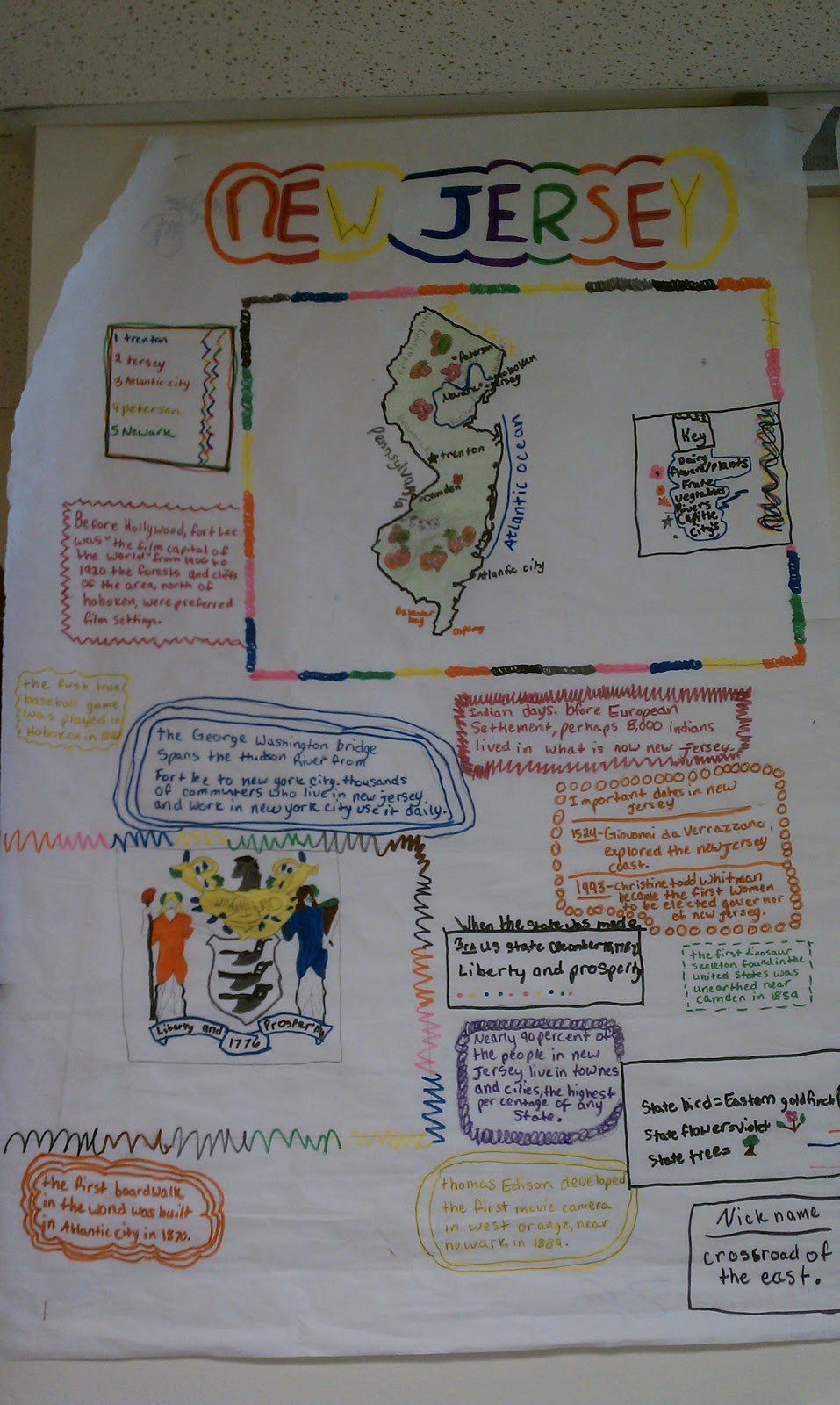
My class just finished their state projects, called State Strips. You can find the information on this great research project on two posts I've done, both Teaching the 50 States, and 5th Grade State Research Project: State Strips. You can access the project guidelines for this great research project here (pdf format or docx format). 

Now that the project is completed, students have also taken the time to present their posters in class. I had students prepare a 1-2 minute long speech in which they taught other students about their state. The exemplary posters were then posted in the hallway. My students love seeing their work in the hallway (and on this blog), so I'm going to show some of the great examples below. Click on any image to see a larger version. 


Monday, September 10, 2012

Update On Social Studies State Strips Project

I recently posted about our current project in social studies (as of September 10th) in a post titled 5th Grade State Research Project: State Strips. Our state strips are off and running. The due date for them in next Wednesday, which means students will have had 10 in class days to finish these projects. We're still fairly early on, but I'm seeing some great progress. Here are some photos of this great project based learning project in action:

Hard at work on Rhode Island. You can see that this student has gotten the title, and is working on facts using one of the classroom atlas books.

This picture shows how we really have to spread out to accommodate for 24 students making posters. We're using every inch of desk and floor space during social studies time, and the kids love it!


Hard at work on Texas. Notice the detail, I'm having students trace their states off of the projector.


More students hard at work with the big map in the background to reinforce the idea of where these states are located.


A great free hand drawing of Colorado's state flag.


A fantastic job so far on the state of Hawaii.


Monday, September 3, 2012

5th Grade State Research Project: State Strips

Like most teachers, I must adapt from year to year to the needs of my students. Although my 9 week plan for the year in Social Studies states that I like to do a unit on United States Geography (states and capitals) after Unit 5, this year I encountered a group of students who don't have a large background in United States geography (I blame high stakes testing, but alas, I must move on). As it's important information, at least on the surface, to learning United States history, I decided to do this unit now, before getting into United States history. This Unit on Geography focuses heavily on naming and identifying the 50 states, and a basic beginners level understanding of World Geography. By clicking on the links above, you can be taken to various resources that can assist you.

This is how it will look in my classroom:

First off, I will print off a large 3 foot by 3 foot wall map of the United States, have student help cut it out, and post it on a bulletin board in the classroom (get this from MegaMaps). As each student finishes their project, they will go and write the name of their state, and color in their state on the map.

Each student will be provided with a 3 foot by 2 foot strip of butcher paper in which to complete their project on (butcher paper is 3 feet wide, so just measure out 2 foot strips and cut).

Following the PROJECT GUIDELINES (pdf format or docx format), students will have exactly one week to complete their project, which is titled "state strips." The example in the guidelines is just something I drew up, and is nothing fancy. I make it a point to not provide them with anything too specific, because I want to see what they're capable of doing.

Sunday, September 2, 2012

Our Completed Pre-Columbian History (Maya, Inca, Aztec, Navajo) Project Posters

My class just finished our major Unit 1 Social Studies project on Thursday, and have placed the posters out in the hallway. Unit 1 is on Pre-Columbian history, and it is entirely student driven, with a project based learning project that is done in groups. Just a short 13 days into the school year, my entire class is loving Social Studies, because they get to determine their own learning within the topic of study.

Here are the guidelines and links for Unit 1, which is highlighted mainly by information on the Maya, Inca, Aztec, Navajo.

The posters themselves are great, because they're simple in nature, yet get students to work together according to the project guidelines (that document is available HERE).

Check out their great posters that are now available for viewing in the hallway outside our classroom: